
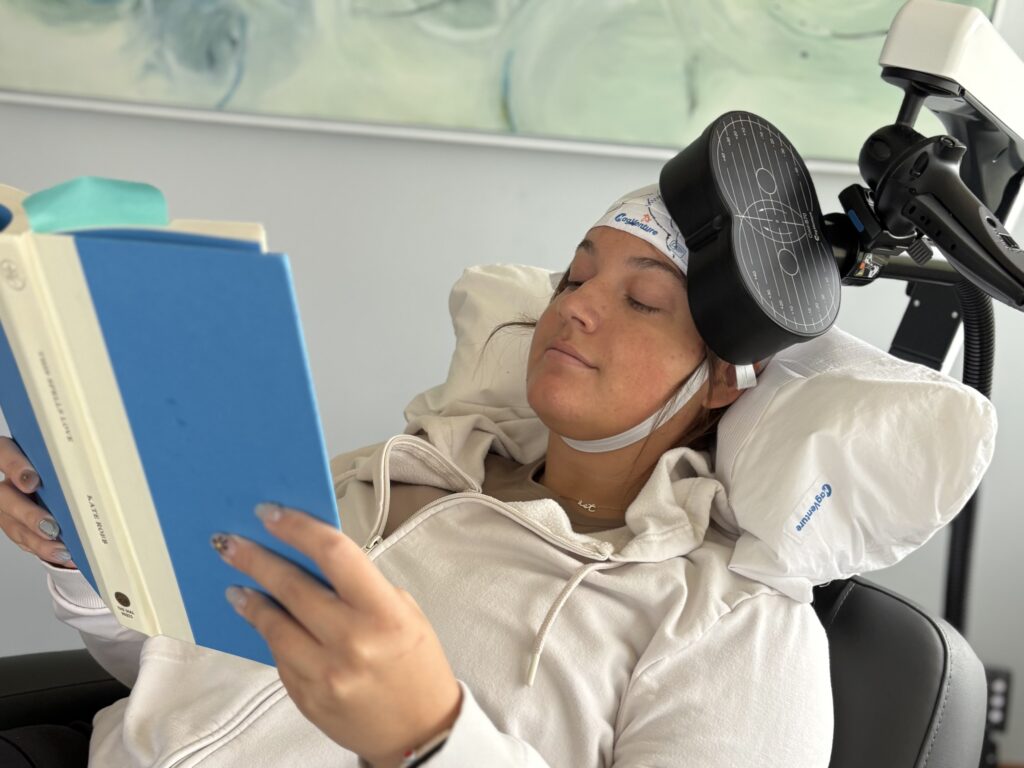
A Comfortable and Personalized Experience Starts Here
If you’ve been navigating major depressive disorder, PTSD, or anxiety and haven’t found relief through traditional treatments, you’re not alone, and there is new hope. At Sunrise Psychiatry, we understand the frustration that can come from trying antidepressant medications, therapy, or even alternative approaches without success. That’s why many patients turn to transcranial magnetic stimulation (TMS therapy) as their next step.
TMS is an FDA-approved, non-invasive treatment that uses targeted magnetic pulses to stimulate areas of the brain involved in mood regulation. With the guidance of our board-certified psychiatrist, Dr. Sonni Elliott, and our caring team in Kansas City, you’ll experience a comfortable, personalized approach from consultation to final session.
Your Initial Consultation with Dr. Elliott
Building a Thoughtful and Personalized Treatment Plan
Every TMS journey begins with a comprehensive consultation with Dr. Sonni Elliott, a board-certified psychiatrist specializing in mental health conditions such as MDD, Generalized Anxiety, and PTSD. During this first visit, you’ll discuss your symptoms, medical history, and previous treatments, including any experiences with antidepressants, ECT, or if you’ve explored options like ketamine treatments (read more about ketamine vs. TMS here).
Dr. Elliott and the Sunrise Psychiatry team will use this information to create a customized treatment plan tailored to your needs. Depending on your condition and history, we will work to find the pathway to ensure the best possible outcome.
Stepping Into the Treatment Room
What to Expect During Your TMS Treatment Sessions
At Sunrise Psychiatry, we aim to make every TMS session feel easy and approachable. From the moment you walk in, you’re greeted by the same technician each day, building familiarity and comfort. Our treatment rooms are warm and calm, with many patients opting to listen to music or watch TV to pass the time during sessions.
Here’s what a typical TMS treatment looks like:
- You’ll sit in a comfortable chair while a magnetic coil is gently placed on your scalp.
- The device delivers magnetic pulses that stimulate nerve cells and neurons in the prefrontal cortex, the area of the brain responsible for mood regulation.
- Each session lasts about 20–30 minutes, and there’s no downtime, you can head back to work, drive home, or even fit in your session on your commute.
We don’t just rely on our clinical expertise to describe the impact of TMS therapy, our patients say it best. Here’s how one individual described their experience at Sunrise Psychiatry:
“It was super easy. Dr. Elliott’s staff made me feel very comfortable. They walked me through the process very well, so I always knew what to expect before treatment. It was a daily treatment, so I would go into her office first thing in the morning before work started and just knock that out real quick. It only took about 15–20 minutes of my day, and then I would go about the rest of my day, no side effects or anything really from it. It’s honestly been so effective. It’s been very helpful.”
Understanding Side Effects and Safety
A Safe, Non-Invasive Alternative to Traditional Treatments
One of the biggest advantages of TMS therapy is its safety profile. As an FDA-approved option, it comes with minimal side effects, especially when compared to medications or ECT.
TMS therapy uses a magnetic coil to deliver targeted magnetic pulses to the prefrontal cortex, helping regulate mood. As a noninvasive outpatient procedure, it requires no sedation or hospital stay, making it both convenient and accessible. The risk of seizures is extremely low—even lower than most psychiatric medications—particularly for those with no history of seizures or epilepsy.
Most patients experience only mild, temporary discomfort at the treatment site or occasional lightheadedness. Unlike traditional antidepressants, TMS has no systemic side effects and no need for anesthesia or recovery time. At Sunrise Psychiatry, patients receive treatment in a comfortable environment, and we offer mouthguards and earplugs during sessions to minimize any potential discomfort.
Patients tell us they feel in control, alert, and comfortable throughout the process.
Duration and Follow-Up
A Proven Path to Long-Term Relief
TMS isn’t a one-time procedure; it’s a course of treatment, usually completed over several weeks. Most patients come in five days a week for about six to eight weeks, with regular check-ins to track progress and make any necessary adjustments. Many individuals begin to notice changes early on, but for some, the most meaningful improvements continue well after treatment ends.
“TMS really helped alleviate those symptoms… It was really helpful,” one patient shared. While she saw about a 50% improvement by the end of her three-month treatment, the most significant progress came afterward. “My symptoms have continued to improve even without continuing the treatment, just building off the progress we made. I finally feel like I’ve reached the full maximum benefit of it, and it’s been great.”
You may begin to notice relief from symptoms of depression within the first few weeks. Even when progress is gradual, our team stays connected with you every step of the way, offering ongoing support and coordinating care with psychotherapy or other mental health services if needed.
Why Patients in Kansas City and Overland Park Choose Sunrise Psychiatry
Expert Care for Patients in Missouri and Kansas
Located in the heart of Overland Park, Sunrise Psychiatry serves individuals across Kansas City, Missouri, and surrounding areas with compassion and clinical excellence. We pride ourselves on offering a personalized, patient-first approach backed by a warm, welcoming atmosphere and a team that truly listens.
We also work with many insurance companies to help make TMS therapy more accessible to those who need it, because we believe no one should have to struggle alone when there’s an effective treatment available.
Take the First Step Toward Feeling Better
You don’t have to keep wondering if something else might help. If treatment-resistant depression, MDD, Generalized Anxiety, PTSD, or another mood disorder is standing in your way, TMS could be the breakthrough you’ve been looking for.
“Doing TMS has been the best decision of my life. I have dealt with severe depression for years with little reprieve from medications. I can honestly say I feel more normal and content than I have in years. I didn’t think I would ever get to this point, but Dr. Elliott and her team made it possible.”
At Sunrise Psychiatry, you’ll find new hope, expert guidance, and real support from day one.
Contact us today to schedule your free 20-minute phone consultation and learn more about TMS treatment options in Kansas City. Or read more testimonials to see how TMS has helped others reclaim their mental health.