
Introduction: A Faster, Effective Approach to TMS Therapy
For individuals struggling with major depressive disorder, especially those who haven’t found relief with medication, transcranial magnetic stimulation (TMS) offers a noninvasive, FDA-approved treatment option. TMS uses magnetic pulses to stimulate targeted areas of the brain, supporting better mood regulation and mental health.
At Sunrise Psychiatry in Kansas City, we take this innovative approach one step further with theta burst stimulation (TBS), a newer and faster version of TMS often called “Express TMS.” Backed by clinical trials, TBS is transforming how we approach the treatment of depression, offering a more convenient path to recovery without sacrificing effectiveness.
What Is Theta Burst Stimulation?
An Introduction to Express TMS
Theta burst stimulation is a specialized form of repetitive transcranial magnetic stimulation (rTMS), designed to mimic the brain’s natural rhythms more efficiently. While standard TMS typically involves high-frequency magnetic pulses delivered over 20 minutes, intermittent theta burst stimulation (iTBS) condenses those sessions into just 3 minutes.
Theta burst stimulation (TBS) works by delivering bursts of magnetic pulses in a unique pattern, similar to how neurons naturally fire in the brain. These pulses are targeted at the left dorsolateral prefrontal cortex, the region most closely linked with mood regulation and depressive symptoms. By modulating this area, TBS encourages healthier brain activity patterns and supports improved emotional well-being.
The Science Behind TBS and How It Works
How TBS Supports Brain Plasticity and Connectivity
At its core, theta burst stimulation (TBS) is a type of neuromodulation, meaning it changes how neurons in the brain communicate. TBS uses highly targeted, pulsed magnetic energy to influence the way nerve cells behave, especially in areas of the brain associated with mood and emotional regulation. This process is noninvasive and has no lasting physical effects on the brain’s structure, but it can significantly impact function.
TBS works by stimulating the left dorsolateral prefrontal cortex, a region consistently found to be underactive in people with major depressive disorder. By targeting this area, TBS helps increase neuronal activity and improve communication between different brain regions involved in mood control, such as the prefrontal cortex, limbic system, and anterior cingulate cortex. In simple terms, the goal is to “reset” the brain’s neural circuits that may be misfiring in depression.
The unique aspect of TBS lies in the way it mimics the brain’s natural firing rhythms. Specifically, it delivers bursts of magnetic pulses in a pattern similar to theta brain waves, which are oscillations that occur during states of relaxation and memory formation. This theta-burst pattern has been studied and proven to promote long-term potentiation (LTP), a process where synaptic connections between neurons are strengthened over time. LTP is critical to neuroplasticity, which refers to the brain’s ability to adapt and rewire in response to experience or treatment.
Clinical research supports the effectiveness of TBS in treating depression. Numerous randomized controlled trials (RCTs) and meta-analyses have shown that TBS can lead to significant reductions in depressive symptoms, with results comparable to traditional rTMS protocols.
In addition to its use in major depressive disorder, TBS is being studied for a growing range of psychiatric disorders, including obsessive-compulsive disorder (OCD), post-traumatic stress disorder (PTSD), generalized anxiety disorder (GAD), and even cognitive dysfunction in neurodegenerative diseases. As research evolves, so does our understanding of how theta burst protocols may support broader applications in mental health care.
In short, TBS offers a modern, neuroscience-backed method for reshaping how the brain functions. Improving connectivity, encouraging plasticity, and modulating activity in mood-related circuits helps restore balance and reduce the burden of depression, especially when other treatments have failed.
What Makes TBS Different from Traditional TMS or ECT
Shorter Sessions, Comparable Outcomes
TBS sessions are significantly shorter than traditional TMS treatments. A standard rTMS session may take up to 40 minutes, including set up, while TBS is usually complete in under 10 minutes. Despite this efficiency, clinical outcomes remain strong. It is a time-saving and optimal treatment choice.
Patients also report better tolerability with fewer side effects. And unlike electroconvulsive therapy (ECT), TBS doesn’t require anesthesia or cause memory disruption. It is a modern, convenient option for people seeking effective mental health care without major interruptions to their daily lives.
Who Is a Good Candidate for TBS?
Identifying the Right Patients for Intermittent Theta Burst
TBS is particularly well-suited for patients dealing with treatment-resistant depression or MDD. It may also be helpful for those with obsessive-compulsive disorder (OCD) or anxiety. Because of its shorter sessions, it appeals to individuals with demanding schedules or those seeking minimal time away from work and responsibilities.
At Sunrise Psychiatry, every patient begins with a personalized consultation to assess their unique needs. We consider predictors such as antidepressant history, variability in past treatment response, and preferences when designing the right RTMS protocol, which may include TBS.
TBS at Sunrise Psychiatry: What to Expect
Your Experience with Express TMS in Kansas City
At Sunrise Psychiatry, we strive to make the TBS treatment process as smooth and supportive as possible. Here’s what a typical Express TMS session looks like:
- Brief Check-In – Our team checks on your symptoms and treatment progress.
- Comfortable Environment – You’ll sit in a relaxed setting during treatment where you have the option to watch a show or movie, listen to calming music or sounds, or simply sit in silence and enjoy a break in your day.
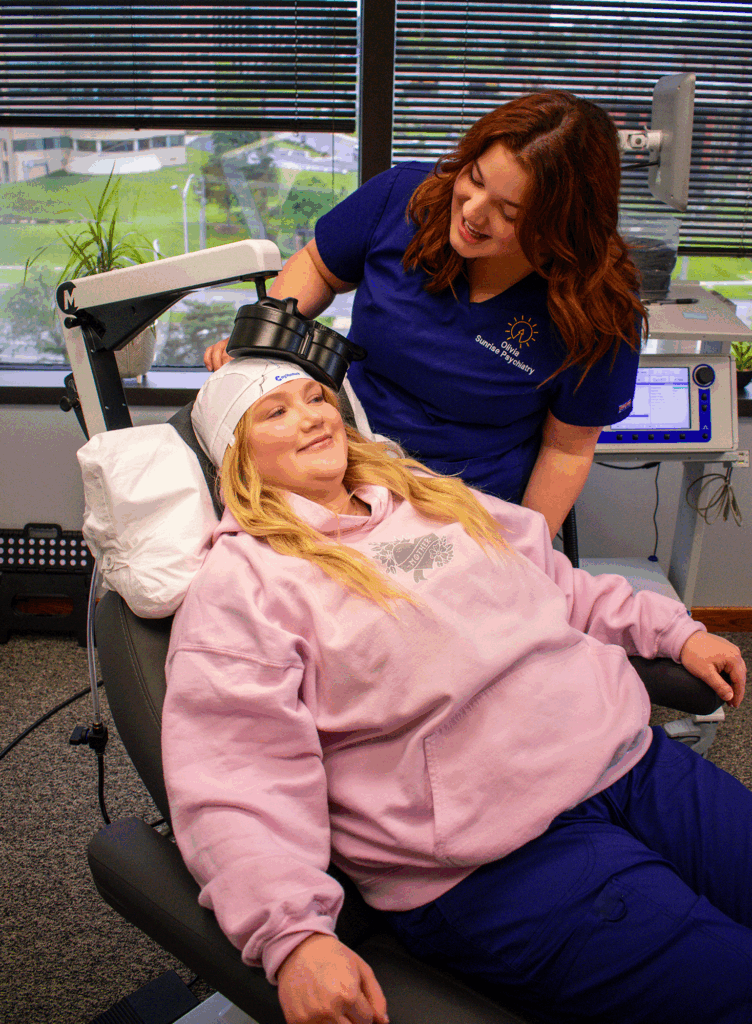
- Targeted Magnetic Pulses – Using a specialized magnetic coil, we deliver magnetic pulses to the left dorsolateral prefrontal cortex.
- Quick Visit – The total time in the office is usually 10 to 15 minutes, including check-in.
- No Downtime – Many patients return to work, school, or errands immediately after.
TBS is a safe, FDA-cleared procedure covered by many health insurance providers. Every treatment is supervised by Dr. Elliott, who ensures your plan is tailored to your needs. Want to hear from others who’ve tried it? Read real patient testimonials here.
A Shorter, Smarter Option for Depression Care
Why More Patients Are Choosing Express TMS
With its fast sessions, strong clinical support, and minimal side effects, theta burst stimulation offers new hope for individuals facing persistent depressive symptoms. This FDA-approved treatment is not only scientifically sound- it’s designed to fit modern life.
If you’re in Kansas City and exploring your options for TMS therapy, Sunrise Psychiatry is here to help. Contact us today to schedule a consultation and see if Express TMS is the right path forward for your mental health.