
Two Powerful Tools for Mental Health Treatment
Living with a mental health condition like major depressive disorder (MDD), treatment-resistant depression, or obsessive-compulsive disorder (OCD) can feel incredibly overwhelming, especially when you’ve tried antidepressant after antidepressant with little to no relief. Psychotherapy can be helpful, but for some, it’s just not enough on its own. That’s where transcranial magnetic stimulation (TMS) therapy comes in. TMS is a noninvasive, FDA-approved treatment that’s been changing lives by offering a new path forward, without the need for medication or electroconvulsive therapy (ECT).
TMS uses magnetic pulses to stimulate specific regions of the brain involved in mood regulation and emotional processing. It’s proven to be an effective treatment option for a wide range of conditions, including MDD, OCD, migraine headache, and even post-traumatic stress disorder. What many people don’t realize is that there are different types of TMS therapy, like repetitive TMS (rTMS) and Deep TMS (dTMS), and understanding how they differ can help you and your provider choose the right fit for your unique needs.
What Is Transcranial Magnetic Stimulation (TMS)?
A Noninvasive, Evidence-Based Option for Treating Depression
TMS treatment—short for Transcranial Magnetic Stimulation—is a type of neuromodulation that uses magnetic fields to stimulate areas of the brain associated with mood regulation, especially the prefrontal cortex. This region plays a big role in emotional control and decision-making, and it’s often underactive in people experiencing symptoms of depression.
The procedure itself is simple and noninvasive. During each session, an electromagnetic coil is placed gently on your scalp, targeting specific regions of the brain with brief magnetic pulses. There’s no need for sedation or downtime, and treatments are done right in an outpatient office setting, and many people even drive themselves to and from appointments.
TMS therapy is typically delivered over several weeks, with patients coming in for daily sessions Monday through Friday. While the exact length of treatment can vary based on the individual and the protocol used, most complete their course within six to nine weeks. The best part? TMS has a strong success rate and very few side effects, usually just some mild scalp discomfort or light headache during or after treatment. With a growing body of clinical research backing its effectiveness in the treatment of depression and other conditions, TMS continues to offer real hope to those seeking lasting relief.
What Is rTMS?
Repetitive TMS and Its Deeper Reach
Repetitive Transcranial Magnetic Stimulation (rTMS) is one of the most well-established forms of brain stimulation for people dealing with treatment-resistant depression—especially those who haven’t found relief through medications or traditional talk therapy. As a form of neuromodulation, rTMS delivers targeted magnetic pulses to specific areas of the brain involved in mood regulation, most notably the left dorsolateral prefrontal cortex, a key region often underactive in cases of major depression.
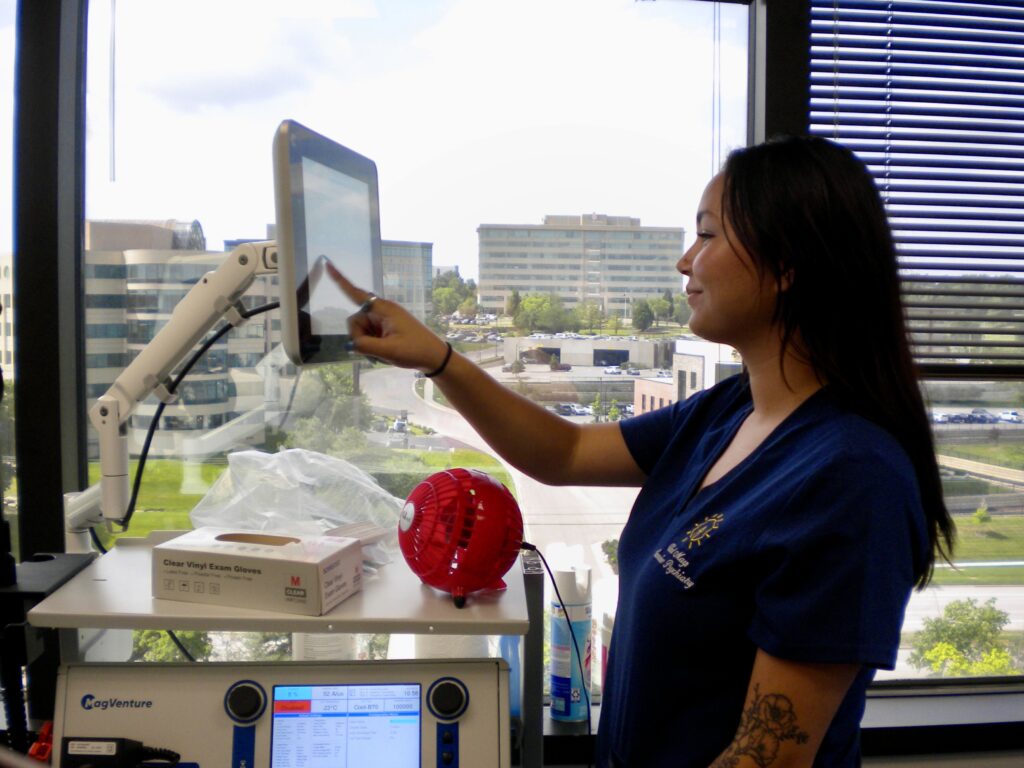
At Sunrise Psychiatry, we use a MagVenture rTMS system equipped with a figure-8-shaped magnetic coil. This coil is designed to focus stimulation precisely, allowing us to target nerve cells close to the magnet, limiting excessive magnetic output. The technology enables brain cells to connect more effectively with each other and transmit signals on their own to deeper areas of the brain, thereby stabilizing each region affected by mental health conditions. The system has been extensively studied in clinical trials and has been FDA-cleared for the treatment of major depressive disorder since 2008. It’s a noninvasive, well-tolerated option that offers an effective treatment alternative for patients who may feel like they’ve exhausted other treatment options.
We also offer advanced rTMS protocols like theta burst stimulation (TBS)—a cutting-edge approach that compresses what’s typically a 20–30 minute session into just a few short minutes, all without sacrificing efficacy. You can read more about theta burst protocols in our July blog post. These innovations help us personalize the course of treatment even further, allowing us to meet each patient where they are while minimizing disruption to daily life.
The most common side effect? Just some mild scalp discomfort during or after treatment—far more tolerable than the systemic side effects often seen with antidepressants. And while the idea of brain stimulation can sound intimidating, the risk of seizures from TMS is extremely low—less than 0.1% overall.
As noted in an article published by the National Library of Medicine (Stultz et al.), “TMS has successfully been used in patients with epilepsy, traumatic brain injuries, and even those with a prior TMS-related seizure. The rate of TMS-related seizures is comparable to that of most psychotropic medications. While having a seizure is a rare but serious adverse effect of TMS, the benefits of treating refractory depression with TMS may outweigh the risk of suicidal ideation and other significant complications of depression.”
What Is Deep TMS (dTMS)?
A Different Approach to Brain Stimulation
Deep Transcranial Magnetic Stimulation (Deep TMS or dTMS) is another form of noninvasive brain stimulation that uses a specially designed H-coil—also known as BrainsWay’s patented TMS coil to deliver magnetic pulses to broader and deeper brain regions. While standard rTMS uses a figure-8 coil to target specific areas of the brain, Deep TMS is designed to reach deeper brain structures by stimulating a wider field all at once during each treatment session.
Some providers prefer deep TMS treatment for its ability to affect a larger portion of the brain, but that broader reach comes with less precision. In clinical practice, this means Deep TMS may not focus as directly on the dorsolateral prefrontal cortex, the specific part of the brain most strongly associated with major depressive disorder. At Sunrise Psychiatry, we believe that precision matters, especially for patients with treatment-resistant depression. That’s why we use the MagVenture rTMS system, which allows us to target the exact regions that research has shown to be most effective for relieving symptoms of depression.
While both forms of TMS therapy are FDA-cleared and comparably effective, we’ve chosen to offer MagVenuture rTMS at our clinic because of the abundance of research performed on MagVenture machines, demonstrating superior efficacy and outcomes with rTMS. By honing in on key areas with each daily treatment, we’re able to personalize care and deliver better outcomes for our patients—without sacrificing safety or comfort.
Comparing the Two — rTMS vs. Deep TMS
Which TMS Therapy Might Be Right for You?
Both rTMS and Deep TMS are FDA-approved and backed by clinical trials for treating symptoms of depression, OCD, and other mental health conditions. While we know both are effective, there are very few trials that compare the two. As a review, below are some key differences worth considering. Here’s how they compare:
Depth of Stimulation
- rTMS (Repetitive Transcranial Magnetic Stimulation) Targets precise, surface-level brain structures
- Deep TMS (Deep Transcranial Magnetic Stimulation) stimulates deeper brain structures more broadly
Type of Coil Used
- rTMS uses a Figure-8 magnetic coil
- dTMS uses H-coil (BrainsWay proprietary design)
Areas of the Brain Targeted
- rTMS specifically focuses on targeted brain regions and signal connectivity
- dTMS affects a wider, less targeted region of the brain
Side Effects and Tolerability
- rTMS mild scalp discomfort or headache, very low risk of seizure
- dTMS has similar mild side effects; slightly higher intensity may be less tolerated by some
FDA Indications and Conditions Treated
- FDA-approved for major depressive disorder, OCD, Chronic Migraines, and smoking cessation, with more being studied daily, including chronic pain and PTSD
- FDA-approved for similar conditions, including MDD and OCD
Insurance Coverage and Availability
- Widely covered by insurance plans, both commercial and government plans, available at Sunrise Psychiatry
- Coverage varies slightly; not offered at Sunrise Psychiatry
What to Expect from TMS Treatment at Sunrise Psychiatry
Personalized Psychiatry and Proven Results in Kansas City
At Sunrise Psychiatry, we aim to make every TMS session feel easy and approachable. From the moment you walk in, you’re greeted by the same technician each day, building familiarity and comfort. Our treatment rooms are warm and calm, with many patients opting to listen to music or watch TV to pass the time during sessions.
Here’s what a typical TMS treatment looks like:
- You’ll sit in a comfortable chair while a magnetic coil is gently placed on your scalp. As the patient, you can choose to use this time to catch up on sleep, read a book, watch a show, or enjoy some peace and quiet.
- The device delivers magnetic pulses that stimulate nerve cells and neurons in the prefrontal cortex, the area of the brain responsible for mood regulation.
- Each session lasts about 20–30 minutes, and there’s no downtime; you can head back to work, drive home, or even fit in your session on your commute.
We don’t just rely on our clinical expertise to describe the impact of TMS therapy, our patients say it best. Here’s how one individual described their experience at Sunrise Psychiatry:
“It was super easy. Dr. Elliott’s staff made me feel very comfortable. They walked me through the process very well, so I always knew what to expect before treatment. It was a daily treatment, so I would go into her office first thing in the morning before work started and just knock that out real quick. It only took about 15–20 minutes of my day, and then I would go about the rest of my day, no side effects or anything really from it. It’s honestly been so effective. It’s been very helpful.”
Which Option Is Right for You? Let’s Talk About It
Both rTMS and Deep TMS represent exciting, evidence-based breakthroughs in the treatment of depression and other mental health conditions, especially for those who haven’t found relief through medication or therapy alone. These noninvasive treatments are FDA-approved and have shown significant improvements in patients living with major depressive disorder, OCD, and other challenging conditions.
At Sunrise Psychiatry, we’re here to help you navigate your options and choose the most effective treatment based on your unique symptoms, goals, and history. Our team takes the time to understand your needs and build a personalized plan—whether that means starting with rTMS therapy or exploring other supportive options.
If you’re wondering whether TMS might be right for you, we encourage you to schedule a consultation with one of our clinicians or take our online self-assessment to learn more. Relief from depression symptoms is possible—and we’re here to help you get there.