
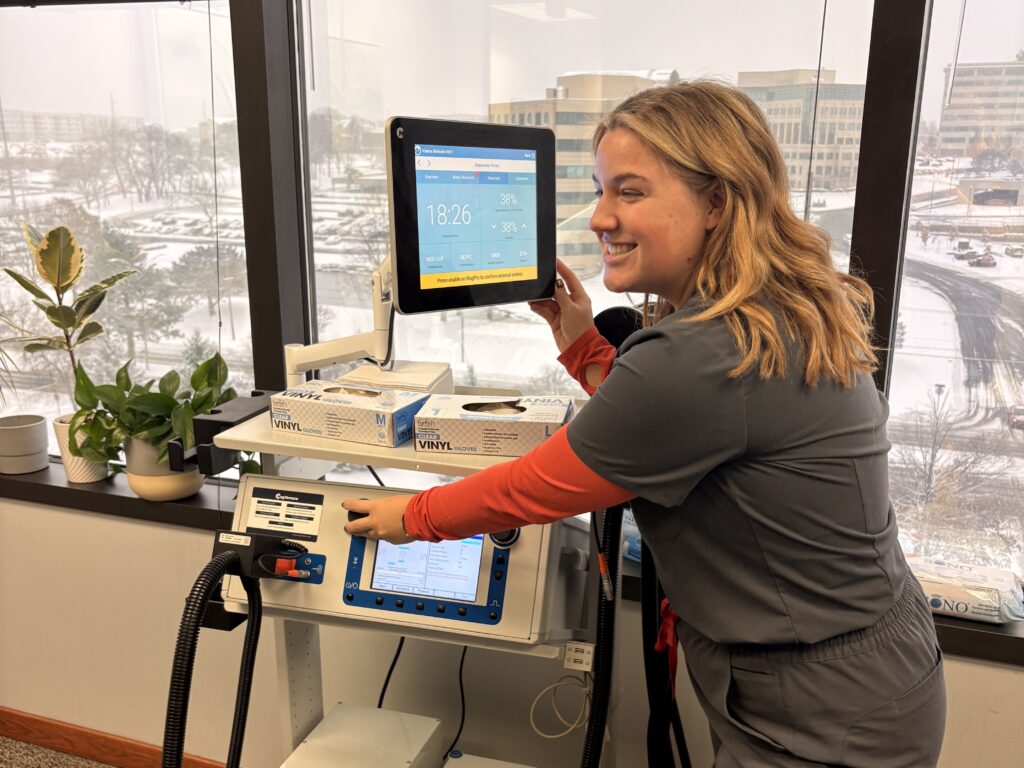
For many people living with depression, anxiety, or other mood disorders, the search for relief can feel endless. If you’ve tried medication, therapy, or lifestyle changes and still don’t feel like yourself, you’re not alone. At Sunrise Psychiatry in Overland Park, we specialize in a non-invasive treatment option called Transcranial Magnetic Stimulation, or TMS. It’s backed by neuroscience, FDA-approved, and offers hope for people who haven’t found success with traditional treatments.
Where Science Meets Healing
If you’re here, you’re probably searching for answers, maybe even for hope. Many people living with depression, OCD, PTSD, or other mental health conditions try medication or talk therapy and still don’t feel the relief they expected. It can be frustrating and discouraging to put so much effort into your mental health and still feel stuck. If that sounds familiar, you’re not alone.
At Sunrise Psychiatry we believe that healing should be rooted in both compassion and science. That’s why we offer Transcranial Magnetic Stimulation, also known as TMS therapy, an FDA-approved and completely non-invasive treatment option designed for people who haven’t found success with traditional approaches such as medication. TMS uses gentle magnetic pulses to stimulate specific areas of the brain involved in mood regulation, helping restore healthy neural activity.
The science behind TMS is fascinating, but more importantly, it offers real hope for individuals in the Kansas City and Overland Park communities who are ready for something different. TMS therapy bridges the gap between innovative neuroscience and real-life healing, making it one of the most exciting treatment options we offer at Sunrise Psychiatry.
If you’re curious about how TMS works or whether it could help you or someone you love, you’re in the right place.
Understanding TMS: How It Works
TMS therapy may sound high-tech, but the science behind it is surprisingly straightforward. Transcranial Magnetic Stimulation uses a small electromagnetic coil placed gently against the scalp. When the treatment begins, this coil sends focused magnetic pulses into specific areas of the brain involved in mood regulation.
These magnetic pulses target nerve cells in the prefrontal cortex, the region that plays a significant role in emotional regulation, motivation, and decision-making. Research shows that in conditions like depression, this part of the brain often becomes underactive. TMS helps “wake it up” by encouraging these nerve cells to fire and communicate more effectively.
Think of it as helping the brain relearn healthier patterns. The magnetic fields stimulate brain regions that are not functioning at full capacity, promoting better neural connectivity and encouraging the release of key neurotransmitters, such as dopamine and serotonin. Over time, this repeated stimulation helps restore brain functions related to mood, stress, and emotional responses.
TMS is not the same as electroconvulsive therapy (ECT), often referred to as “shock therapy.” There is no electricity passing through the body, no seizure activity, and no anesthesia required. TMS is a non-invasive procedure that feels like a gentle tapping sensation on the scalp while you remain fully awake and comfortable. It’s targeted, precise, and FDA-approved as an effective treatment for depression and other mental health conditions.
Why the Science Matters: Backed by Research, Trusted by Experts
When it comes to mental health care, feeling confident in your treatment options matters. One of the reasons TMS stands out is that it isn’t experimental or fringe. It’s a scientifically validated treatment, backed by decades of research, clinical trials, and real-world outcomes worldwide.
TMS is FDA-approved for treating major depressive disorder (MDD) and obsessive-compulsive disorder (OCD), and it has shown promising results for other mental health disorders like PTSD, anxiety, and even certain types of chronic pain. This makes it an important option for people who have not responded to traditional interventions like medications or talk therapy alone.
Leading academic hospitals, medical centers, and psychiatric research programs use TMS as part of their standard behavioral health treatment options. The technology has been studied extensively, with large trials demonstrating strong response rates and remission rates, even among individuals with treatment-resistant depression who have tried multiple medications without success.
Benefits of TMS vs. Traditional Interventions
Finding the right mental health treatment can feel overwhelming, especially if you’ve already tried antidepressant medications or psychotherapy without the results you hoped for. One of the significant advantages of TMS therapy is that it provides a non-invasive treatment option with minimal side effects, making it a strong alternative or complementary approach to traditional methods such as medication and talk therapy.
Antidepressant medications like SSRIs and SNRIs can be life-changing for some people, but they’re not the right fit for everyone. Many individuals struggle with side effects such as weight gain, sexual dysfunction, emotional numbness, or fatigue. Others simply don’t feel significant relief even after trying multiple prescriptions. TMS offers another path. Since it works by stimulating specific areas of the brain with magnetic pulses instead of altering the body’s entire chemical balance, it avoids the systemic side effects associated with antidepressants.
TMS sessions are completed in an outpatient setting and do not require sedation. You sit comfortably in a treatment chair while the device delivers gentle pulses to targeted brain regions. Most people describe the sensation as light tapping on the scalp. After the session, you can drive yourself home, return to work, or continue your normal routine without interruption. This makes TMS easy to integrate into daily life while still prioritizing your mental health and overall well-being.
What Makes Our TMS Treatment Center in Overland Park Different
Located in the heart of Overland Park, Sunrise Psychiatry serves individuals across Kansas City, Missouri, and surrounding areas with compassion and clinical excellence. We pride ourselves on offering a personalized, patient-first approach backed by a warm, welcoming atmosphere and a team that truly listens.
Every TMS journey begins with a comprehensive consultation with Dr. Sonni Elliott, a board-certified psychiatrist specializing in mental health conditions such as MDD, Generalized Anxiety, and PTSD. During this first visit, you’ll discuss your symptoms, medical history, and previous treatments, including any experiences with antidepressants, ECT, or if you’ve explored options like ketamine treatments (read more about ketamine vs. TMS here).
We also collaborate with numerous insurance companies to make TMS therapy more accessible to those who need it, as we believe no one should have to struggle alone when an effective treatment is available.
Is TMS Right for You?
If you’re reading this, it might be because something in your current mental health journey isn’t working the way you hoped. Maybe antidepressant medications aren’t providing the relief you expected. Maybe the side effects feel overwhelming. Or maybe therapy has helped, but you feel like you’ve hit a plateau. These experiences are incredibly common, and they don’t mean you’ve failed treatment; they simply mean you deserve more options and more support.
TMS therapy is most commonly used to treat major depressive disorder (MDD), but many patients have also experienced meaningful improvements in conditions such as generalized anxiety disorder (GAD), obsessive-compulsive disorder (OCD), bipolar depression, PTSD, and other behavioral health challenges.
At Sunrise Psychiatry, we currently offer in-office TMS treatments specifically for MDD, OCD, and GAD. These are the diagnoses with the strongest scientific foundation and the most straightforward insurance coverage guidelines, which help make treatment both effective and accessible. Still, we understand that every person’s mental health journey is unique. If your symptoms don’t fall neatly into these categories, we’re always happy to discuss whether TMS may still be part of your overall care plan.
If you’re feeling stuck, discouraged, or simply curious about what else is available, this might be the right moment to explore TMS therapy. Many individuals navigating treatment-resistant depression or OCD have found renewed hope through TMS a safe, evidence-backed approach delivered by a compassionate team dedicated to your well-being.
Sometimes, the most critical step forward is allowing yourself to consider a new treatment option. We’re here to walk that step with you.
Explore a Modern, Science-Based Path to Healing
At Sunrise Psychiatry, science and compassion come together to offer patients real, lasting results. Our TMS therapy program brings the latest advancements in mental health care to those who are searching for a better way to treat depression, OCD, and anxiety. If you or a loved one is looking for a non-invasive, effective treatment supported by modern neuroscience, TMS may be the next step in your wellness journey.
Our team is here to guide you, answer your questions, and help you understand whether TMS therapy could be the right fit for your mental health needs. Whether you’re navigating treatment-resistant depression or exploring alternatives to medication, we’re committed to helping you find relief through safe, FDA-approved care.
Ready to learn more about how TMS works and how it could fit into your mental health care plan?
Contact us today to schedule a free 20-minute consultation or explore more about our TMS approach.
Your path to healing can start with a single step — and we’re here to take it with you.