
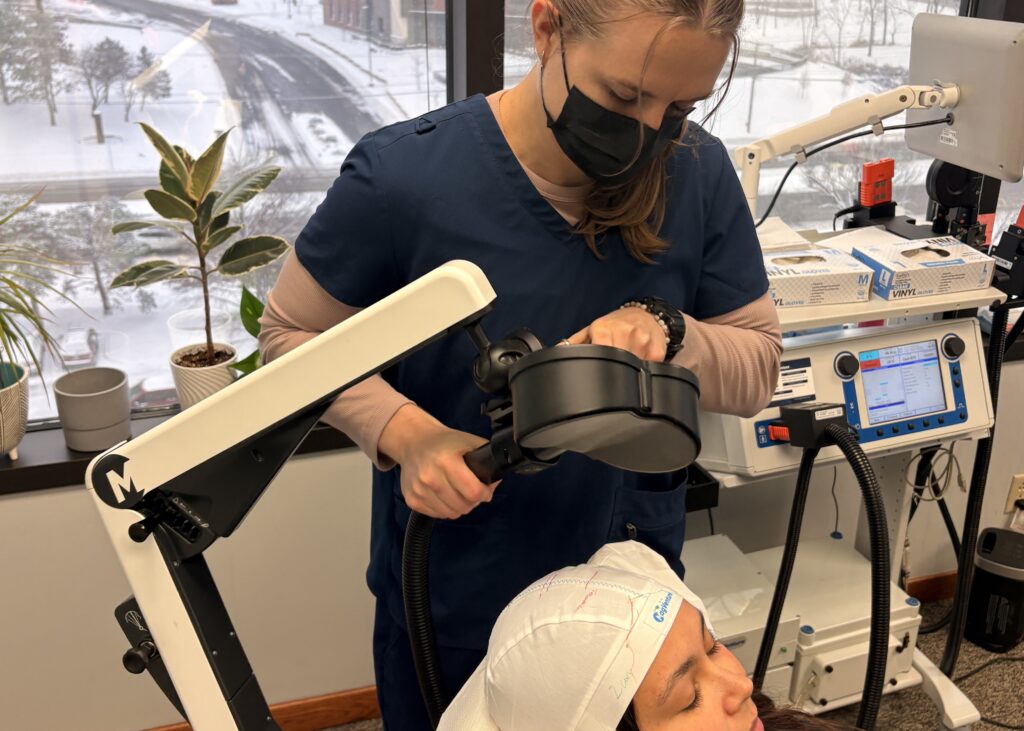
Since its FDA approval in 2008, TMS therapy has offered a safe, medication-free alternative for the treatment of psychiatric conditions like depression, OCD, and smoking cessation. For many individuals, traditional treatments like antidepressant medication and psychotherapy do not provide sufficient relief from symptoms of major depressive disorder. At Sunrise Psychiatry, we’ve been offering TMS, or Transcranial Magnetic Stimulation, treatment in the greater Kansas City metro area since 2022 for those in search of another option to treat their symptoms of depression, and we’ve seen the positive outcomes of this non-invasive treatment firsthand.
What Is Magnetic Stimulation Therapy?
Magnetic stimulation therapy, also known as transcranial magnetic stimulation (TMS), is a non-invasive treatment that uses gentle magnetic pulses to stimulate specific areas of the brain.
In simple terms, a magnetic coil is placed against your scalp, and it sends small magnetic pulses into the brain. These pulses help “wake up” underactive areas that may not be working as well as they should. One of the main areas targeted is the prefrontal cortex, which plays an important role in mood, focus, and decision-making.
It’s important to understand that TMS is not the same as electroconvulsive therapy (ECT). Unlike ECT, TMS does not use electrical currents to cause seizures, and it does not require sedation or medication. You remain awake and alert during treatment, and you can return to normal activities afterward.
- Sunrise offers two types of magnetic stimulation therapy:
- Repetitive Transcranial Magnetic Stimulation (rTMS) – This is the standard form of TMS, delivering repeated magnetic pulses over a set period to gradually improve brain activity.
- Theta Burst Stimulation (TBS) – A newer, shorter form of treatment that delivers magnetic pulses in quick bursts, often reducing session time while achieving similar therapeutic effects.Suggested Keywords:
transcranial magnetic stimulation, TMS therapy, magnetic pulses, magnetic fields, prefrontal cortex, neurons, rTMS, theta burst, deep transcranial magnetic stimulation, Deep TMS therapy, electroconvulsive therapy, ECT, areas of the brain
How TMS Works in the Brain
Transcranial magnetic stimulation (TMS) works by using carefully controlled magnetic fields to target specific areas of the brain involved in mood regulation. The most common target is the prefrontal cortex, which is a region that plays a key role in managing emotions, decision-making, and abstract thinking. In conditions like depression and anxiety, this area can become underactive or out of balance.
During treatment, a magnetic coil placed on the scalp delivers pulses that pass painlessly through the skull and stimulate the targeted brain tissue. These magnetic pulses create small electrical currents in the brain cells (neurons), helping activate regions that are not communicating effectively.
This stimulation encourages neurons to fire more normally and consistently. Over time, repeated sessions help strengthen the connections between neurons, improving how different parts of the brain communicate with each other. Better communication within mood-regulating networks can reduce symptoms such as low mood, excessive worry, and difficulty concentrating.
By restoring healthier patterns of brain activity, TMS has been shown to be an effective treatment for depression and anxiety. Rather than masking symptoms, it works by regulating the underlying brain circuits involved in emotional balance.
Who Can Benefit From TMS?
TMS is an FDA-approved, non-invasive treatment designed to help individuals living with certain mental health conditions, particularly treatment-resistant depression. It is most commonly used for:
- Major Depressive Disorder (MDD)
- Obsessive-Compulsive Disorder (OCD)
TMS is especially beneficial for individuals who have not experienced sufficient relief from antidepressant medications or who have struggled with unwanted side effects. Rather than affecting the entire body like medications, TMS directly stimulates the areas of the brain involved in mood regulation, offering a targeted and effective treatment option.
At Sunrise Psychiatry, we are a specialized TMS clinic focused exclusively on magnetic stimulation therapy. We do not offer ketamine treatment. By concentrating solely on TMS, we provide consistent, physician-led care and personalized treatment plans rooted in evidence-based psychiatry.
What to Expect During a TMS Treatment Session
If you’re considering TMS treatment, knowing what a typical session looks like can ease concerns.
During a TMS session:
- You’ll sit comfortably in a reclining chair.
- A specialized TMS coil will be gently positioned against your scalp.
- The device delivers magnetic pulses to targeted brain regions.
- You’ll hear a repetitive clicking sound as the pulses are delivered.
Most patients describe the sensation as a light tapping on the scalp. Sessions are generally well tolerated, and there is no anesthesia or sedation required.
One of the biggest advantages of TMS treatment is that there is no downtime. After your treatment session, you can:
- Drive yourself home
- Return to work
- Resume normal daily activities
- Exercise or run errands
A standard treatment plan typically involves multiple sessions per week over several weeks. At Sunrise Psychiatry, each treatment plan is personalized based on your diagnosis, symptom severity, and treatment history. For some patients, maintenance sessions may be recommended to help sustain long-term results.
Why Choose Sunrise Psychiatry as Your Kansas City TMS Provider?
Choosing the right treatment center matters.
Sunrise Psychiatry is a physician-led clinic under the direction of Dr. Sonni Elliott, a board-certified psychiatrist dedicated to thoughtful, individualized mental health care. Our providers prioritize comprehensive evaluations, personalized treatment plans, and compassionate support throughout your TMS journey.
Conveniently located in Overland Park, we proudly serve patients throughout the Kansas City area, including communities in both Kansas and Missouri. Our clinic is designed to provide a welcoming, supportive environment where patients feel heard and understood.
Patients often share positive testimonials about:
- The attentive, physician-guided care
- Clear communication about treatment options
- Support navigating insurance coverage
- The comfort and professionalism of our team
We understand that pursuing TMS treatment can feel like a big step. Our health care team works closely with you from consultation through completion of your treatment plan.
Relief Is Possible—Explore Your Options
If you have struggled with treatment-resistant depression or other mental health conditions and haven’t found relief through traditional treatment options, TMS may offer a new path forward.
As an FDA-approved, non-invasive treatment option, TMS has helped many individuals regain energy, clarity, and emotional balance without the systemic side effects associated with antidepressants.
At Sunrise Psychiatry, we are committed to helping patients across Kansas City and Missouri explore safe, effective solutions through specialized psychiatry care.
Relief is possible. If you’re ready to learn whether TMS treatment is right for you, we invite you to schedule a consultation. Together, we can create a personalized treatment plan designed to support your healing and long-term wellness.