
A New Path for Managing Depression Symptoms
Living with major depressive disorder, OCD, or another mental health condition can be incredibly difficult, especially when standard treatments like antidepressant medications or psychotherapy fall short. Many individuals spend years trying different medications or therapy techniques, only to find limited relief or intolerable side effects.
At Sunrise Psychiatry in Overland Park, Kansas, we understand how frustrating this can be. That’s why we offer an alternative depression treatment backed by science and approved by the FDA: transcranial magnetic stimulation, or TMS therapy. This noninvasive treatment option has helped many patients find long-term relief from treatment-resistant depression with minimal side effects.
What Is TMS Therapy and How Does It Work?
The Science Behind Transcranial Magnetic Stimulation
TMS stands for transcranial magnetic stimulation. This health care treatment utilizes a magnetic coil to deliver focused magnetic pulses to areas of the brain that regulate mood, most often the prefrontal cortex. These magnetic fields stimulate nerve cells and help restore healthy brain activity in individuals experiencing depression and other psychiatric disorders.
Unlike more well-known treatment methods, TMS is a noninvasive approach. There are no medications involved, and no anesthesia is required. Each outpatient session typically lasts around 20 to 25 minutes, and patients are free to drive themselves home afterward. Through a process called neuromodulation, TMS encourages long-term changes in the brain that support improved mood and reduced depressive symptoms.
Why People Are Turning to TMS as an Alternative to Traditional Treatments
A Different Approach When Medications or Therapy Aren’t Enough
When antidepressant medications or psychotherapy aren’t enough, many people seek other depression treatments. Some have tried multiple prescriptions with little success. Others may be hesitant to pursue electroconvulsive therapy (ECT) due to its potential cognitive side effects or the risk of seizures.
TMS therapy offers a different path forward. It has shown promising results in clinical trials not only for major depression but also for obsessive-compulsive disorder and substance abuse. Compared to ECT, TMS provides a gentler approach as an in-office intervention without the need for sedation, memory disruption, or recovery time.
What to Expect from a TMS Treatment Plan
A Safe and Structured Process Tailored to You
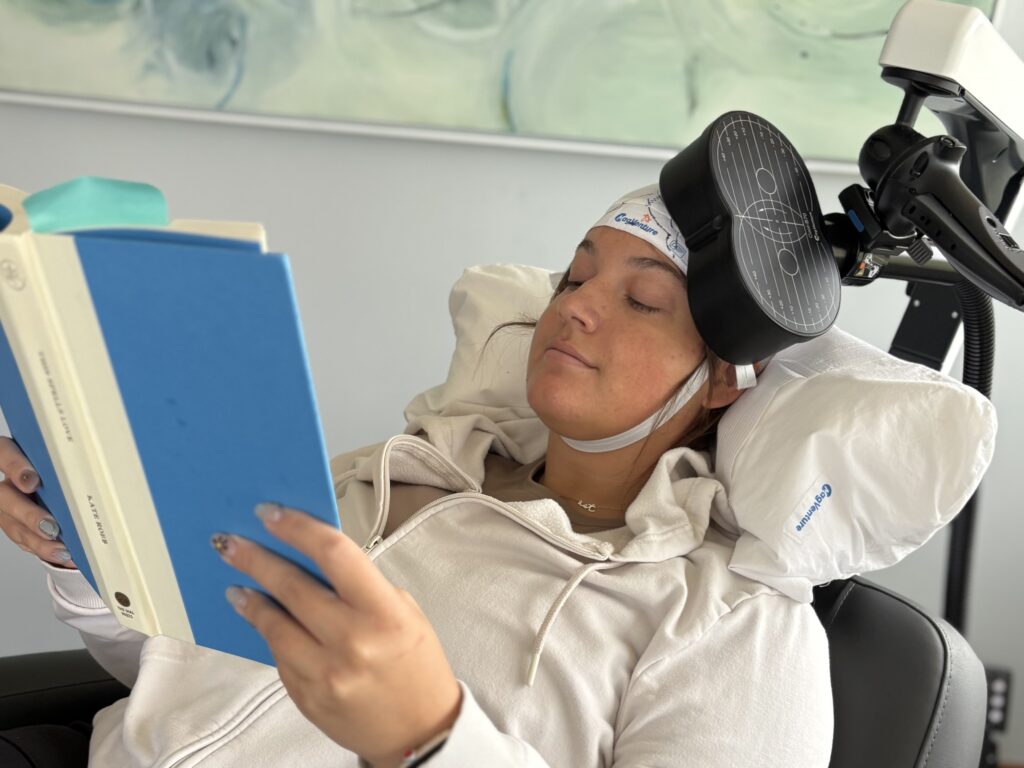
At Sunrise Psychiatry, we aim to make every TMS treatment session feel easy and approachable. From the moment you walk in, you’re greeted by the same technician each day, building familiarity and comfort. Our treatment rooms are warm and calm, with many patients opting to listen to music or watch TV to pass the time during sessions.
Here’s what a typical TMS treatment looks like:
- You’ll sit in a comfortable chair while a magnetic coil is gently placed on your scalp.
- The device delivers magnetic pulses that stimulate nerve cells and neurons in the prefrontal cortex, an area of the brain responsible for mood regulation.
- Each TMS session lasts about 20–30 minutes, and there’s no downtime; you can head back to work, drive home, or even fit in your course of treatment on your commute.
We don’t just rely on our clinical expertise to describe the impact of TMS therapy, our patients say it best. Here’s how one individual described their experience at Sunrise Psychiatry:
“It was super easy. Dr. Elliott’s staff made me feel very comfortable. They walked me through the process very well, so I always knew what to expect before treatment. It was a daily treatment, so I would go into her office first thing in the morning before work started and just knock that out real quick. It only took about 15–20 minutes of my day, and then I would go about the rest of my day, no side effects or anything really from it. It’s honestly been so effective. It’s been very helpful.”
Understanding the Side Effects and Success Rate
A Well-Tolerated Option With Growing Evidence of Effectiveness
One of the biggest advantages of TMS therapy is its safety profile. As an FDA-approved option, it comes with minimal side effects, especially when compared to medications or ECT.
TMS therapy uses a magnetic coil to deliver targeted magnetic pulses to the prefrontal cortex, helping regulate mood. As a noninvasive outpatient procedure, it requires no sedation or hospital stay, making it both convenient and accessible. The risk of seizures is extremely low, even lower than most psychiatric medications, particularly for those with no history of seizures or epilepsy.
Most patients experience only mild, temporary discomfort at the treatment site or vivid dreams. Unlike traditional antidepressants, TMS has no systemic side effects and no need for anesthesia or recovery time. At Sunrise Psychiatry, patients receive treatment in a comfortable environment, and we offer mouthguards and earplugs during sessions to minimize any potential discomfort. Patients tell us they feel in control, alert, and comfortable throughout the process.
Because TMS is an effective treatment that targets specific parts of the brain instead of affecting the entire body, the side effect profile is significantly milder than that of antidepressants. Clinical trials, meta-analyses, and systematic reviews have consistently shown that TMS is both safe and effective in reducing depressive symptoms.
For those looking for even faster results, newer innovations like theta burst stimulation (TBS) offer shorter sessions while maintaining the same level of clinical benefit.
Who Is a Good Candidate for TMS Therapy?
Is This the Right Mental Health Treatment for You?
TMS therapy is most commonly used to treat major depressive disorder (MDD), and many patients have also seen benefits for conditions such as generalized anxiety disorder (GAD), obsessive-compulsive disorder (OCD), bipolar depression, PTSD, and other behavioral health challenges.
At Sunrise Psychiatry, we currently offer in-office TMS treatments specifically for patients with MDD, OCD, and GAD. These are the diagnoses we focus on, as they have the strongest evidence base and the most straightforward insurance coverage guidelines for the treatment of depression. However, we recognize that every mental health journey is unique, and we’re always happy to discuss whether TMS may still be part of your broader care plan.
What truly sets our clinic apart is the level of personalized attention we provide. Dr. Elliott takes great care in getting to know each patient before developing a treatment plan. Your journey with TMS begins with a thoughtful consultation where she listens to your experiences, reviews what treatments you’ve already tried, and evaluates whether TMS is an appropriate next step. From there, every aspect of the treatment is tailored to fit your needs, not just clinically, but personally.
Dr. Elliott and the team at Sunrise Psychiatry prioritize building strong therapeutic relationships. We know that trust, connection, and compassion make a real difference in how treatment is experienced. Whether you’re struggling with persistent depressive symptoms or anxiety that hasn’t responded well to medication, our goal is to help you feel heard, supported, and hopeful.
Many insurance providers, including Medicare and Medicaid, now cover TMS therapy for major depression. We’re happy to help you explore your benefits and answer any questions during your initial consultation.
A Hopeful Next Step for Lasting Relief
Even if you’ve struggled with symptoms of depression for years, TMS therapy may offer a new path forward. As an FDA-approved and evidence-based treatment, TMS has helped thousands of people find relief where other treatments failed.
If you’re interested in exploring this alternative depression treatment, we invite you to contact Sunrise Psychiatry in Overland Park. Our experienced team will walk you through the process and help determine whether TMS could work for you.