
Living with depression can be exhausting, especially when you have done everything you were told to do. You show up for talk therapy, take antidepressant medications as prescribed, and still feel weighed down by the same symptoms of depression. For many people in Kansas City, that cycle can start to feel discouraging and isolating. If you are feeling stuck or frustrated with your mental health care, you are not alone, and it does not mean you have failed treatment.
While antidepressant medications can be helpful for some, they are not always the right fit for everyone. Many patients struggle with side effects like weight gain, emotional numbness, fatigue, or sexual dysfunction, which can sometimes feel just as disruptive as depression itself. When the benefits do not outweigh the drawbacks, it is natural to wonder whether there is another treatment option worth considering.
Transcranial Magnetic Stimulation, or TMS, is one option that more people are exploring for treatment-resistant depression. TMS is a non-invasive therapy that uses gentle magnetic pulses to stimulate areas of the brain involved in mood regulation. At Sunrise Psychiatry in Overland Park, we take a thoughtful, compassionate approach to care, helping patients understand their options and feel supported every step of the way. If traditional treatments have fallen short, there is still hope – and new possibilities may be closer than you think.
What Is Magnetic Stimulation for Depression?
Magnetic stimulation for depression most commonly refers to Transcranial Magnetic Stimulation (TMS), a non-invasive, FDA-approved treatment that targets areas of the brain involved in mood regulation. Unlike medications that work throughout the entire body, TMS uses focused magnetic pulses to stimulate specific regions of the brain that are often underactive in people with depression.
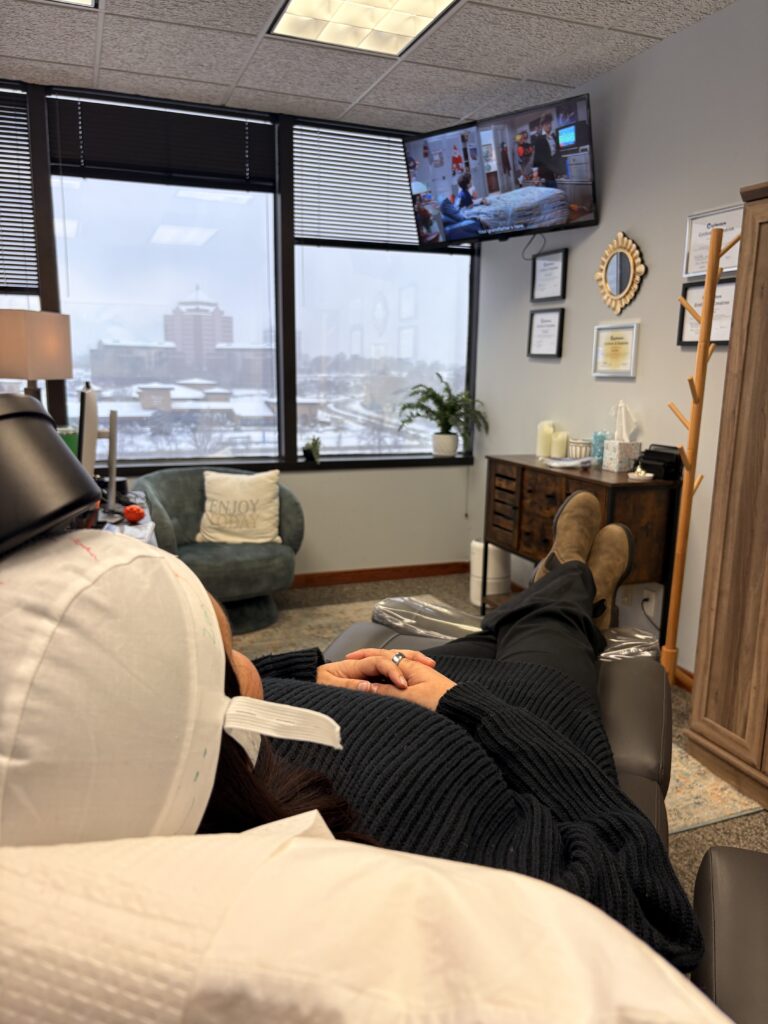
During a TMS session, a small electromagnetic coil is gently positioned near the prefrontal cortex, an area of the brain closely linked to mood, decision-making, and emotional regulation. The coil delivers brief magnetic pulses that activate nerve cells, or neurons, helping them communicate more effectively. Patients remain awake and alert during treatment, and sessions are typically well tolerated.
It is important to clarify that TMS is not electroconvulsive therapy (ECT). TMS does not require sedation, does not induce seizures, and does not lead to memory loss or long-term cognitive side effects. The experience is very different from what many people imagine when they hear the term “brain stimulation,” and most patients are able to return to their normal daily activities immediately after each session.
At Sunrise Psychiatry in Overland Park, we offer both repetitive TMS (rTMS) and theta burst stimulation – two evidence-based forms of magnetic stimulation. While you may see terms like “deep TMS” mentioned elsewhere, current research has not shown that deep TMS is more effective than standard TMS protocols. Our approach focuses on treatments supported by strong clinical evidence and tailored to each patient’s needs. We also do not offer ketamine treatments, allowing our team to stay highly specialized in magnetic stimulation and comprehensive psychiatric care.
Is TMS Effective for Depression, OCD, or PTSD?
For many people, TMS can be an effective treatment when other approaches have not provided enough relief. It is most commonly recommended for individuals with treatment-resistant depression, meaning they have tried therapy and antidepressant medications without meaningful improvement. TMS is also FDA-approved for obsessive-compulsive disorder and has shown promising results for people struggling with symptoms related to post-traumatic stress disorder.
Clinical research, along with real-life patient experiences, consistently shows strong response and remission rates with TMS. Many patients notice gradual but meaningful changes over the course of treatment, often describing a sense of mental clarity or emotional lift that had been missing for a long time. Because TMS targets specific areas of the brain involved in mood and behavior, it works differently from medication and does not carry the same systemic side effects or require long-term use.
At Sunrise Psychiatry, patients often seek TMS for very real, everyday struggles that go beyond a diagnosis on paper. Common concerns we see include persistent low mood, lack of motivation, brain fog, fatigue, difficulty concentrating, emotional numbness, intrusive or obsessive thoughts, and feeling disconnected from things that once brought joy. Many patients also report improvements in focus, energy levels, and overall well-being as treatment progresses.
While TMS is not a one-size-fits-all solution, it can be a powerful option for those who feel stuck or discouraged by traditional treatments. Our team takes time to determine whether TMS is a good fit, ensuring each patient receives care that is thoughtful, personalized, and grounded in both clinical evidence and compassion.
Why Choose Sunrise Psychiatry in Overland Park?
Choosing where to receive mental health care matters, especially when you are considering a treatment like TMS. At Sunrise Psychiatry in Overland Park, TMS is administered under the care of Dr. Sonni Elliott, a board-certified psychiatrist with extensive experience in treating mood and anxiety disorders. Every treatment plan is physician-led, thoughtful, and centered around what will truly benefit the patient.
We proudly serve the Kansas City and Overland Park communities with a personalized, non-corporate approach to psychiatry. Our clinic is intentionally small, allowing our team to spend time getting to know each patient rather than rushing through appointments. We specialize in evidence-based TMS treatments, including repetitive TMS and theta burst stimulation, both of which are FDA-approved and supported by strong clinical research.
Compassion is just as important as clinical expertise. Our team understands that seeking care for depression, OCD, or PTSD can feel overwhelming, and we work hard to create an environment where patients feel heard, supported, and respected throughout the process. Many patients tell us that the difference they notice most is how comfortable and cared for they feel from their very first visit.
We also know that logistics matter. Our staff helps patients navigate insurance coverage and works directly with insurance companies whenever possible to reduce stress and confusion. From the initial consultation through the final session, we build a treatment plan tailored to your needs, your goals, and your life – because effective mental health care should never feel one-size-fits-all.
There Is Hope for Depression Relief
From your initial consultation through the completion of treatment, your care is overseen by a physician who understands both the science behind TMS and the real-life impact depression can have on your day-to-day life.
We proudly serve patients throughout Overland Park and the greater Kansas City area, offering personalized, non-corporate mental health care. Our practice is intentionally designed to feel supportive and patient-centered, not rushed or transactional. Every treatment plan is individualized, because no two experiences with depression are exactly the same.
Sunrise Psychiatry specializes in repetitive TMS (rTMS) and theta burst stimulation, two FDA-approved, evidence-based approaches delivered by a compassionate, highly trained team. We focus on treatments backed by strong clinical research and real-world outcomes, rather than trends without proven benefit. Our staff takes the time to get to know you, answer questions, and make sure you feel comfortable and informed throughout the process.
We also understand that navigating insurance can feel overwhelming. Our team works closely with insurance companies to help determine coverage and guide you through each step, so you can focus on your health care, not the paperwork. From evaluation to treatment and follow-up, our goal is to make this experience as clear, supportive, and stress-free as possible.
Your Path to Relief Starts Here
Even if you’ve struggled with symptoms of depression for years, TMS therapy may offer a new path forward. As an FDA-approved and evidence-based treatment, TMS has helped thousands of people find relief where other treatments failed.
If you’re interested in exploring this alternative depression treatment, we invite you to contact Sunrise Psychiatry in Overland Park. Our experienced team will walk you through the process and help determine whether TMS could work for you.